Showing posts with label Bird Watching. Show all posts

Friday, March 29, 2013

'Bird Watching'


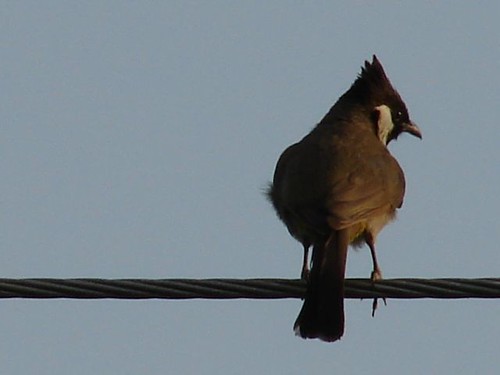
I 'shot' this aircraft flying overhead while taking photos of spring flowers of my garden. Turned out to be good - ain't it!!

Thursday, November 22, 2012

November - the month of the migratory birds to the delight of bird watchers


November brings along hundred and thousands of migratory birds from frozen and freezing Siberia and the cold struck Central Asian Republics to the rather 'warmer' waters of Pakistan and remain our guests till March, when they start to go back to their homes where the snow would soon start to melt.

Black Swans, Houbara Bustard and swarms of migratory birds arrive Pakistan in November
The in-numerous wetlands of Pakistan stretched from north to south provide natural habitat to these migratory birds, who not only survive the winters but also lay eggs and rear their young ones to take them back home.

The birds include  majestic swans and Flamingos, beside many other species like the Marbled Teal, White-headed Duck, Eurasian Spoonbill, Dalmatian Pelican which throng the wetlands in Pakistan. 

-->


For the bird watchers, the arrival of these countless migratory birds’ provides an opportunity to flock the wetlands and enjoy their presence. I am witness to a large flock of a birds in an artificial lake in Sandh and Gabbar villages inside the desert near Rahim Yar Kha, in the Southern Punjab province of Pakistan. I still remember the majestic black swans flying over me beside a horde of other species. 

One of the endangered species that comes along with the migratory birds is the Houbara Bustard - now almost on the verge of extinction. It is sad to see this bird being hunted by the Arab dignitaries through specially tamed falcons which are let lose and then they prey the poor Houbara Bustard right in the air and bring these back. 

Read more:
Wetland of Pakistan (Pakistanpaedia)
Bird Watching in Pakistan (Pakistanpaedia)

Saturday, July 23, 2011

Seeing Nature - the best of the hobbies

The best and most beautiful things in the world cannot be seen or even touched. They must be felt within the heart. – Helen Keller

I vividly remember when I learned that my grandfather was becoming blind. Macular degeneration had destroyed all but his peripheral vision, and in order to see me when we spoke, he looked away from me. It was an eerie experience for a young boy. As his vision disappeared, his precious wood-carving tools began to gather dust in the basement, and his well-loved books sat silent on their shelves.
But my grandfather never seemed upset as his vision faded. I’d sit next to him in the living room, gazing out the huge picture window, and he’d say, “Here come the chickadees.” The first time he did this I felt a little embarrassed for him, because the feeders were empty except for a pair of cardinals. But a moment later, as if my grandfather were some mystic seer, his predication came true and the chickadees flickered down out of the sky.
He could predict which birds would come to the feeders with uncanny accuracy. He wasn’t psychic, of course. Rather, he was hearing birds perched in trees across the yard as they discussed how they’d approach the feeders. But the sounds that were so clear to his ears seemed inaudible to me. The loss of his sight had helped him pay more attention to his other sensory impressions – impressions that I ignored because I relied so heavily on sight.
I had forgotten the lessons of my grandfather’s blindness until my wife and I stepped outside the other day and were confronted with a remarkable cacophony. It was the busy chirping of a horde of goldfinches that had just come to the feeders.
As we stood there enfolded by an almost deafening symphony, I closed my eyes and suddenly remembered my grandfather’s ability to predict the coming of the birds. It made me wonder how much of the world passes us by, lost because our senses have grown complacent. As writers, Rebecca and I often spend much of our day in front of a computer, with a bright glare in our eyes and the computer’s hum in our ears. Often it’s not until we step outside that our senses begin to wake up, and if we sit outside long enough, the world begins to come to life. Birdsong and wind’s caress, dripping icicles and billowing clouds, a hawk spreading its feathers into the rising air of a thermal. These are hints of the bounty available to our senses when we take the time to step out into nature.
As Rebecca and I went back inside to sit down to our computers, I silently thanked my grandfather. He had turned his blindness into a gift, inspiring a young boy to realize that the world is bigger and more mysterious than we usually think. Nature is uniquely qualified to compliment his teachings– next time I go for a walk, I think I’ll take a bit more time to pay attention to the sounds, smells, visions, and sensations around me.
As Helen Keller suggested, the gifts of our senses can lead us to beautiful discoveries. For me, the sound of the goldfinches led me back to a memory of my grandfather, and his lessons bring me full circle to nature, where I discover what it really means to see, even when my eyes are closed.
Shared from: Seeing Nature

Friday, June 3, 2011

A rare parrot like bird humps the photographer's head

Sometimes one comes across rare species of birds and animals when in quest of something new and different.  Watch herein under a video of a rare bird, which looks to be from the parrot family, and also notice with how much difficulty the bird would have been spotted as it is almost merged with the surroundings, or camouflaged. 


But when going so close to birds, beware of it humping on your head as it did in this video on the photographer’s head.


Source: BREAK

Tuesday, March 29, 2011

Bird Watching – Know the types of birds

Birding or bird watching is one of the most liked hobbies of people around the world. While the city dwellers have to make an effort to go to places which abound in birds, those in rural areas and countryside have a far easier access to watch these beautifully coloured creatures pecking on their window panes or singing while perched in the trees. In fact the sound of birds is so melodious that one wouldn't like these to cease and continue listening to one of the best voices created by the Nature.

For bird watchers, there is a wide variety of birds to chose from, as the variety of birds changes from place to place. One would find it easier to recognize birds if one knew what kind frequented in the area. Herein under are some of the types of common birds that are seen, spotted and loved by brid watchers around the world.

Left to right: Avocet, Eastern Bluebirds, Doves, Gray Catbird, Great Spotted Eagle, Bald Eagle

Avocet: Avocets are long legged, webbed feet birds with a long and thin up-curved bills. The long bills are used to catch the feed from the wetlands they prefer. There are four species of avocets namely the Pied avocet, American avocet, Red-necked avocet and the Andean avocet. The avocets are found in Americas, Europe and Australia.

Eastern Bluebirds: These small birds, only six and half inches long, are often found in farmlands, orchards and open places and recognized by their white bellies, with bright blue and red top and reddish brown throat and breast. The female birds usually have a grayish head with shades of blue. Eastern Bluebirds are found east of the Rockies, southern Canada to the Gulf States and southeastern Arizona to Nicaragua.

Doves: who would not recognize a dove as it is the international symbol of peace and romance. A little smaller than an ordinary pigeon, doves have long tail. The doves are found throughout the world and have a very peculiar melodious voice.

Gray Catbird: This is a medium sized bird and is found in North America. In some areas it is also known as the Slate-coloured Mockingbird. Gray in colour, catbirds are known for imitating the sounds of other birds.


Eagles: Eagle is one of the most majestic birds that are found throughout the world. There are more than 60 species of eagles that are found in Africa, Asia and Eurasia. The Golden and Bald eagles are the two species that are specific to the USA and Canada. In Pakistan one can find Pallas's Fish Eagle, Greater Spotted Eagle (above second from right) and the Imperial Eagle in various national parks.

Flamingo: The pink coloured long legged bird with a unique elongated and turning down beak, flamingo is one of the most beautiful bird. There are six species of flamingo, namely Greater Flamingo (found in parts of Africa, S. Europe and S. and SW Asia), Lesser Flamingo (found in the Great Rift Valley of to NW India and Pakistan), Chilean Flamingo (found in temperate South American countries), James’ and Andean Flamingos (found in High Andes in Peru, Chile, Bolivia and Argentina) and American Flamingo found in Caribbean and Galapagos islands.

Geese: Geese are a common sight across the globe and are often domesticated. Most of the species of the geese are migratory and can be spotted during migratory seasons in countries where wetlands attract these from nearby colder regions. This family also includes swans, most of which are larger than true geese, and ducks, which are smaller. 

Herons: Herons, often called Egrets or Bitterns, are in fact a large number of different birds that include storks and spoonnills. These are also migratory birds found around wetlands. There are 64 recognized species of birds falling under Heron family. The herons are medium to large sized birds with long legs and necks. The largest species of heron is the Goliath Heron (above right). The necks are able to kink in an s-shape, due to the modified shape of the sixth vertebrae. 

We will talk of more bird types in our next post.

related reading: Bird watching in Pakistan

Sunday, March 27, 2011

Pakistan - a Birdwatchers' Haven

Evening Sun Bathed
The generally warm and humid climate of Pakistan attracts millions of migratory birds from Sibera, Euorpe and the CARs every year through the famous Indus Flyway or the Green Route. And technically speaking the International Migratory Bird Route Number 4 that commences from the Karakoram, Hindu Kush and Suleiman mountain ranges inside Pakistan along the Indus River down to its delta near the Arabia Sea, is one of the most popular and populous route for the migratory birds escaping the harsh winters of Siberia.

Sometime back, I happen to be visiting a manmade lake near Rahim Yar Khan where the saline water is being pumped out of the saline hit lands of the Southern Punjab to make these lands cultivable. And what an amazing scene it was. I had never seen in my life so many birds at one place. Once they flew, the whole sky seemed to be turned into darkness. I saw for the first time in my life black swans majestically flying overhead and then landing into the green water of the lake. It was a life time experience.

There are a number of wetlands spread all over Pakistan that provide sanctuary not only to the migratory birds but also the local birds as well. Some of these are Haleji Lake (near Karachi), Uchali wetlands, Rasool Barrage wildlife sanctuary, Drigh Lake and Kalri Lake. The numerous National Parks located in Pakistan are also house to some rare and indigenous birds. Western Tragopan pheasant (Tragopan melanocephalus) is one of the rare species that exists in the northerly mountains and the Macharia National Park, where it is being bred and chances are that this beautiful bird will be able to be saved of its near extinction in Pakistan.

This is for the information of bird lovers and birdwatchers all over the world to watch the birds landing, flipping in water and flying overhead majestically and beautifully as I did years before.

Read more: 
Bird watching in Pakistan (Pakistanpaedia)
Migratory Birds Route Number-4 (SAJS)

Source: Jaho Jalal

Tuesday, February 8, 2011

Bird Watching in Pakistan


I am not an avid bird watcher. But a few years back, I happened to have visited areas south of Rahim Yar Khan and there in an artificial canal, near the villages of Sandh and Gabber,  created to divert the saline water, I for the first time in my life came across millions of migratory birds over the deep blue water of the canal. Black Swans flew majestically over head. And then I started reading about birds, specially those who are indigenous to Pakistan and those who are migratory and visit us each year in abundance, especially from Siberia.

I also got a chance to see the Houbara Bustard, in the coastal area near Jhampir/Thatta of Sind province when I was detailed as a conducting officer with the royalties of a friendly country. They royal guests had come for the falcon-hunting of Houbara Bustard. I also came to know then the Houbara Bustard has been declared as one of the endangered species. 

Pakistan’s diverse weather and varied land attracts some of the rare and exclusive birds of the world to its wetlands and lakes that are stretched all over the country. The migratory birds, besides native birds in their natural habitat in the jungles and mountains, provide an excellent opportunity to the bird watchers around the world. Western Tragopan pheasant (Tragopan melanocephalus - pictured above) is one of the rare species that exists in the northerly mountains and the Macharia National Park , where it is being bred and chances are that this beautiful bird will be able to be saved of its near extinction in Pakistan.

Besides Siberia, birds from Europe and Central Asian states also fly to the Pakistani wetlands for winter. They said that migratory birds flew over Karakorum, Suleiman Ranges and Hindukush along the Indus River, which is called the Indus Flyway or Flyway Number 4. It may be added here that there are seven flyways all around the world followed by the migratory birds every year in the search of warm waters during winters. The volume of birds on Indus Flyway ranges between 700,000 to 1,200,000 birds each year.
Some of the many birds that one comes across include Lammagier and Griffon Vulture, Laggar Falcon, Kestrel, Black-tailed Godwit’ Dalmatian Pelican, Mallard, Northern-Shoveler, Greater Spotted Eagle (Aquila clanga), Imperial Eagle (Aquila Heliaca), Indian Skimmer (Rynchops Albicollis), Brooks's Leaf-warbler, Spectacled Finch, Ruddy Shelduck, my favourite Flamingos and many other species.

The mangrove forests along the Arabian Sea coast also attracts 30,000-50,000 migratory birds. Among the birds that visit mangroves are gulls, coots, terns, dalmatian pelicans, flamingos, osprey dowitchers, dunlin oystercatchers, waders and duck. Birds that are permanent residents of the mangroves are herons, egrets, black-winged stilts and cormorants.

For the bird watchers, Pakistan and its wetlands await them to come and see some of the rare and beautiful birds of the world. The time-in of the birds flow is between September to November, while the time-out is between February to March, when finally it is warm enough back home for the birds to fly back.


Related Sites:

Tuesday, January 11, 2011

10 Vividly Colourful Birds

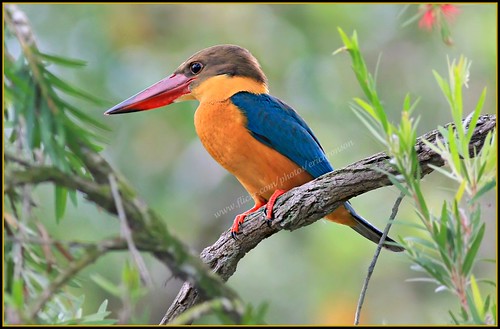
Stork-billed Kingfisher
Stork-billed Kingfisher by EricBronson

Glossy-Starling
Glossy-Starling by *Kicki*
IMG_0214
by Albert Tay

Lilac-breasted Roller
Lilac-breasted Roller by nftodd

Yankee Doodle Dandy
Yankee Doodle Dandy by Armpro

water displacement..........
water displacement.......... by twentyeight

Dacnis cayana
Dacnis cayana by Flavio Garcia

Blue & Gold Macaw 3.
Blue & Gold Macaw 3. by Ian Mc1

southern cassowary portrait ~ on black
southern cassowary portrait on black by rogersmithpix

Swift Parrot by rogersmithpix

The above birds are nested in Jalalspages Birds Watchers Album on Flickr

Monday, December 27, 2010

Chukar – the national bird of Pakistan

The Chukar Partridge (Alectoris chukar) is a Eurasian upland game bird in the pheasant family Phasianidae of the order Galliformes, gallinaceous birds. Its native range in Asia from Pakistan and Kashmir, India and Afghanistan. It is closely related and similar to its western equivalent, the Red-legged Partridge. The Chukar is a rotund 32-35 cm long bird, with a light brown back, grey breast, and buff belly. The face is white with a black gorget. It has rufous-streaked flanks and red legs. When disturbed, it prefers to run rather than fly, but if necessary it flies a short distance on rounded wings. Chukar prefers rocky, steep, and open hillsides and is abundantly available in Pakistan.
The Chukar is a resident breeder in dry, open, and often hilly country. In the wild, Chukar travel in groups of 5-40 birds called coveys. It nests in a scantily lined ground scrape laying 8 to 20 eggs. Chukars will take a wide variety of seeds and some insects as food. When in captivity, they will lay 1 egg per day throughout the breeding season if the eggs are collected daily.
For hunters, Chakur is a very challenging bird because of its surgical upward flights and sudden disappearances in the bushes. I have accompanied some hunter friends of mine many a times, and found this highly agile bird to be very difficult to shoot. Once threatened, it hides itself into bushes and camouflages itself so securely and tightly that it is hard to get it out again.
Related Reading: Bird Watching in Pakistan (Pakistanpaedia)

Tuesday, December 21, 2010

Bird Watching

Nature around us is to powerful and compelling that it takes us out in jungles and wilderness to witness its truth and grandeur. Birds are Nature’s sweetest Vuvuzelas which attract bird lovers around the globe to walk into dense jungles to find them and enjoy their melodious sounds. Along with many other hobbies, bird watching is one of the most widespread hobbies around the world.
Man has always wanted to fly by getting inspiration from the birds flying high in the sky. And this attracted the man to the birds and appreciate it ability to fly. The varying verities and their beautiful cloak attracted people to watch them and appreciate their beauty. This quest further when the quest to find newer and newer species. Since bird watching can only be done in complete silence and stillness, only those who love the peace and tranquility start to bird watch as birds would disappear in a jiffy if these sense even the slightest movement on ground or listen to a faintest sound not familiar to them. The best thing about the hobby of birding is that one doesn’t require a special gear for watching bird. At best one may need a pair of binoculars and water proof boots if one is thinking of venturing into the water.
And when one ventures into it, it is whole lot mysterious, surprising, informative and soul satisfying. One may never know what kind of bird one may find on a particular birding day. The small digital cameras with zooming facility come handy in taking photographs of the unknown species and adding the photos to one’s own database.
For beginners, bird watching, which also called birding, is simply the observation of birds with naked eye or through binoculars. One starts to learn to quickly recognize what group a bird belongs to. This can be done by becoming familiar with the general shape, color, and behavior of birds, and by keeping a running tally of what kinds of birds are generally seen in ones locality or area at given time of the year. As one learns the basics, then bird watching becomes a study of birds and identifying the birds even by listening the bird calls.
No matter how birding is practiced, bird watching is mainly an outdoor recreational activity for personal pleasure and social reasons. The bird watching differs from the ornithology, which is the study of birds using more specific scientific methods and is the job of professionals called ornithologists.
Pakistan is one of the lucky countries where each year hundreds and thousands of migratory birds arrive from the cold regions of Siberia, CARs and Europe to find comparatively warm waters to spend their winters. These birds start to arrive in early November and stay here till March-April, when they start their homeward journey. This provides an excellent time for the bird watchers to satisfy their birding hobby and watch some of the beautiful birds of the world.
I am myself witness to such a site in Sind desert where I found countless migratory birds resting on the green waters of an artificial lake near Sandh and Gabbar. When my jeep engine broke the silence of otherwise calm that prevailed in that remote desert lake, suddenly the entire lot took off and it turned the bright sunny day into almost total darkness as the sky was filled with those majestic birds, specially the black swans, and my favourite.
Besides black swans, Houbara Bustards, Flamingos, Swans and many other species of birds like the Marbled Teal, White-headed Duck, Eurasian Spoonbill, and Dalmatian Pelican throng the wetlands in Pakistan.
My next post will encompass details on bird watching sites and wetlands that attract migratory birds each year.
Related Reading: Come November – the guests season starts (JahoJalal)

Twitter Delicious Facebook Digg Stumbleupon Favorites More

 
Powered by Blogger | Printable Coupons